
Warehouse Cleanout Services in Minneapolis, MN
YOU CAN COUNT ON
Junk Masters handles warehouse cleanouts start to finish, pulling old inventory, broken pallets, busted shelving, and packaging so the building is ready for its next use. We run commercial junk removal for contractors, landscapers, and property managers every week.

 Based on 2450 Reviews
FULL-SERVICE
WAREHOUSE CLEANOUTS
We Do It All!
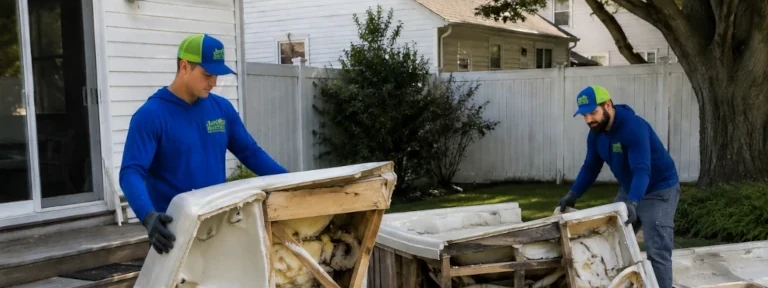
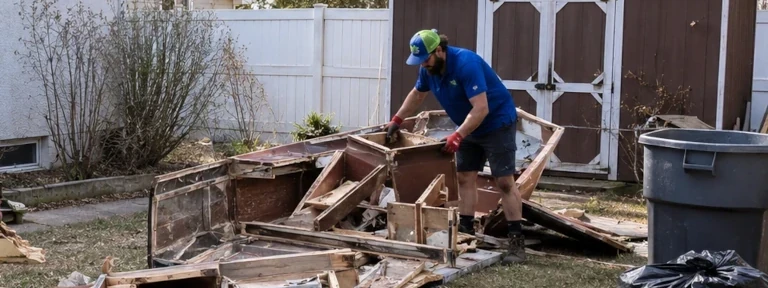
A warehouse cleanout covers more ground than a regular junk pickup, so we built our crew and trucks to match. We handle demolition debris, old shelving and racks, damaged inventory, pallets, cardboard, and general clutter that’s piled up over time. Clearing a warehouse yourself means renting a truck, finding extra hands, and hauling heavy loads out on your own – we take that off your plate. Our team walks the space first, figures out what’s staying and what’s going, then loads it all out so you’re left with an empty, usable building at a price that makes sense.
Clearing a Warehouse Without Shutting It Down
A warehouse rarely empties in one pass, and most of them are still running a business while it happens. If part of the building has to stay live, tell us which aisles, racks, and doors need to keep working and we will clear the sections that are going first rather than blocking the floor. A cleanout planned around your operation takes the same number of hours as one that fights it — the difference is whether anybody upstairs notices.

Reach out now to Schedule Your Pickup!
Main Items We Collect
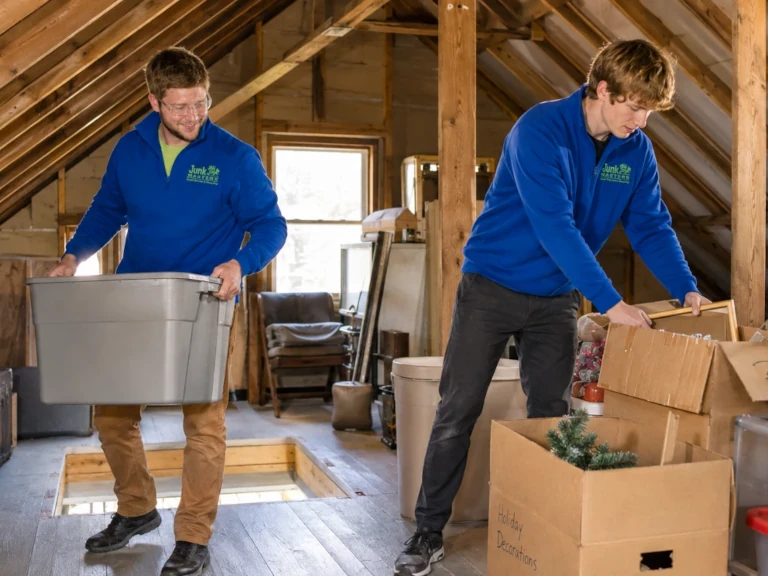
- Attics: Old Boxes and Storage
- Containers
- Garages: Seasonal Decorations
- Old stuff: Sporting Equipment
- Old Toys and Games
- Books and Magazine boxes
- Sofas and Couches
- Mattresses and Bed Frames
- Tables and Chairs
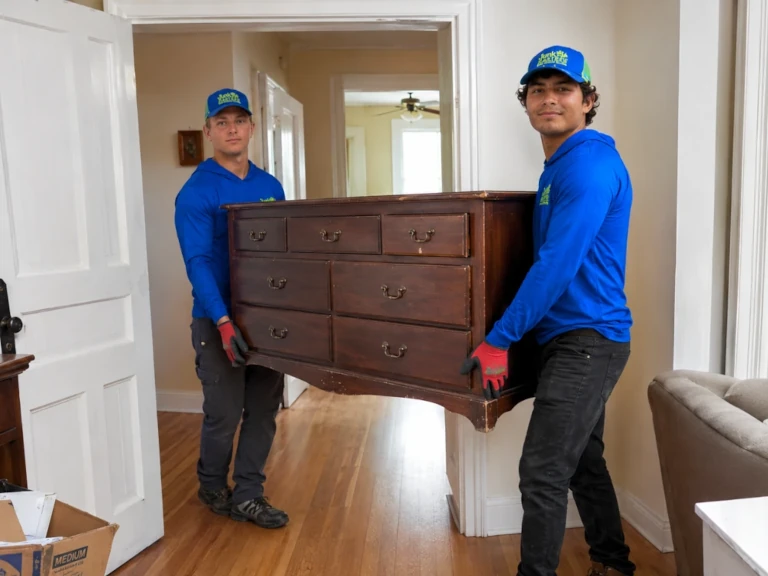
- Dressers and Wardrobes
- Entertainment Centers
- Televisions
- Computers and Laptops
- Printers and Scanners
- Monitors
- Gaming Consoles
- Desks and Office Chairs
- Filing Cabinets
- Office Electronics (fax machines, copiers)
- Cubicle Partitions
- Conference Tables
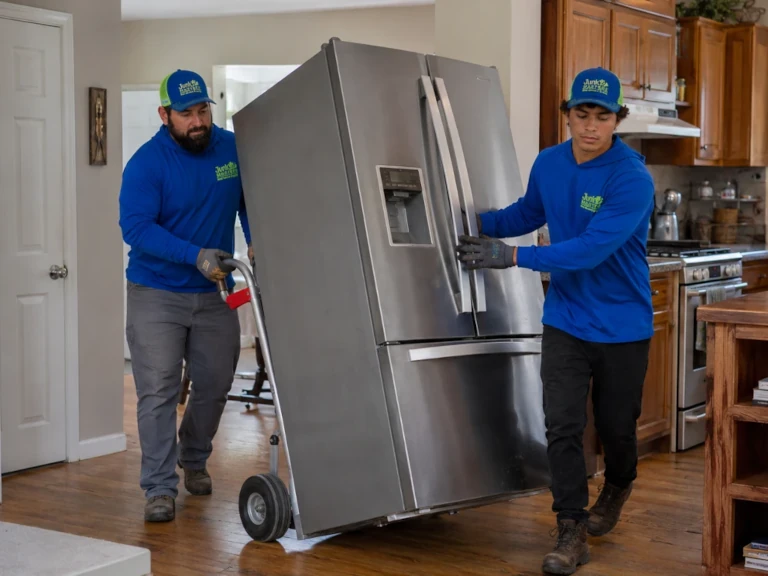
- Refrigerators and Freezers
- Washers and Dryers
- Stoves and Ovens
- Microwaves
- Dishwashers
Racking Is Its Own Job
Pallet racking is a system, not furniture. Uprights and beams are pinned or bolted together and often anchored into the slab, and anything that came in on a forklift has to go out in pieces. Wire decking lifts out, beams come off the uprights in a set order, and footplates stay put until the frame above them is down. Mezzanines, conveyor, and workbenches that were bolted to the floor years ago work the same way. It is worth telling us what is anchored before the day of the job, because that is the part that decides how long the building takes. Beyond the racking, most warehouse loads are some mix of:
- Wood and plastic pallets, banding, and stretch wrap
- Cardboard and packaging in volume
- Obsolete, damaged, or returned inventory
- Shelving, carts, bins, totes, and workbenches
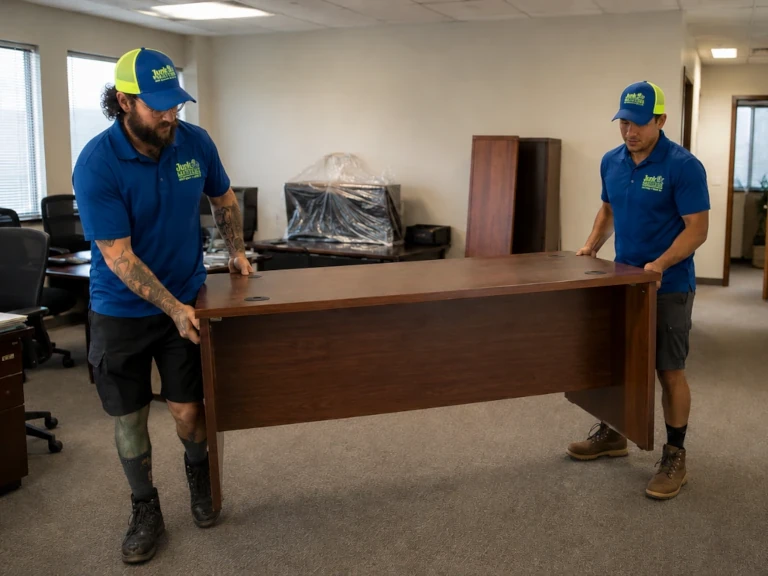
- Office and breakroom furniture from the front of the building
- Old computers, monitors, printers, and label printers
Access Decides the Day
A building with a dock and a working leveler loads very differently from one with a single overhead door and a grade up to it. Let us know which you have, whether a forklift and an operator will be on site, and what your door and ceiling clearances are. Some warehouse material also sits outside what any junk removal truck can legally take — solvents, waste oil, paint, and pressurized cylinders need a licensed hazardous waste handler. Point those out on the walkthrough and we will tell you straight away what goes on our truck and what needs a separate call. If the cleanout is for a lease turnover or a sale, the finish line is usually written down somewhere: send us that language and we will work to it rather than to a guess.
How Our Company Stands Out

Same-Day & 24/7 Service
Fast pickups today, and urgent jobs at any hour.

Licensed & Insured
Trained, fully insured crews, so your property stays protected.

Responsible Disposal
We recycle and donate usable items where possible.

Locally Owned & Operated
A Twin Cities team, not a national franchise.
Book Us Today!
Scheduling us is easy with our online booking tool, or you can call us to talk to someone in real time. We have same and next-day availability, so if you need a warehouse cleaned out fast, we can get a crew out there. On the day of the job, our team walks through with you, confirms what’s being removed, and gets to work loading trucks – you don’t have to lift a box or move a pallet yourself. Once we’re loaded up, we sweep the area and haul everything away, so the space is ready for whatever comes next.
Warehouse Cleanout FAQs
Yes, Junk Masters can do a warehouse cleanout in sections while the rest of the building keeps working. Tell the crew which aisles, racks and doors need to stay in use, and they clear the sections that are going first instead of blocking the floor. The cleanout is planned around your operation.
Pallet racking is handled as its own job in a warehouse cleanout, because uprights and beams are pinned or bolted together and often anchored into the slab. Beams come off the uprights in a set order. Tell the crew what is anchored before the day of the job, since that decides how long the work runs.
Some warehouse material sits outside what any junk removal truck can legally take. Solvents, waste oil, paint and pressurized cylinders need a hazardous waste handler. Point those items out during the walkthrough, and Junk Masters will tell you what goes on the truck and what needs a separate call.
A warehouse cleanout from Junk Masters covers wood and plastic pallets, banding, stretch wrap, cardboard, packaging, and obsolete, damaged or returned inventory. It also covers shelving, carts, bins, totes, workbenches, demolition debris, and old computers, monitors and printers. Office and breakroom furniture from the front of the building goes too.
For a warehouse cleanout tied to a lease turnover or a sale, send the written language that defines the finish line, and the crew will work to it instead of a guess. Also share how the building loads, such as a dock with a leveler or one overhead door, plus forklift availability and clearances.